Operations managers book warehouse & industrial cleaning in Bakersfield, CA when standard janitorial crews cannot handle the square footage or the soil. Gabriel Bravo has worked large-footprint sites for 36+ years, from storage facilities to oilfield yards. Crews cover open floor, dock areas, aisles, and attached offices. Work fits around shifts and live equipment.
Request pricing for your facility’s cleaning needs.
Industrial cleaning handles buildings with heavier soil loads, higher ceilings, and larger floor areas. These spaces require a cleaning approach beyond a standard commercial routine. The work covers open floor scrubbing, dock and staging areas, racking aisles, dust removal from surfaces and elevated ledges, restrooms, locker rooms, and the offices attached to the operation.
Ride-on and walk-behind autoscrubbers, industrial vacuums, and degreasing products do most of the heavy work. Equipment maintenance, machine cleaning, and hazardous material handling are not part of this. Those stay with your own team and specialist contractors.
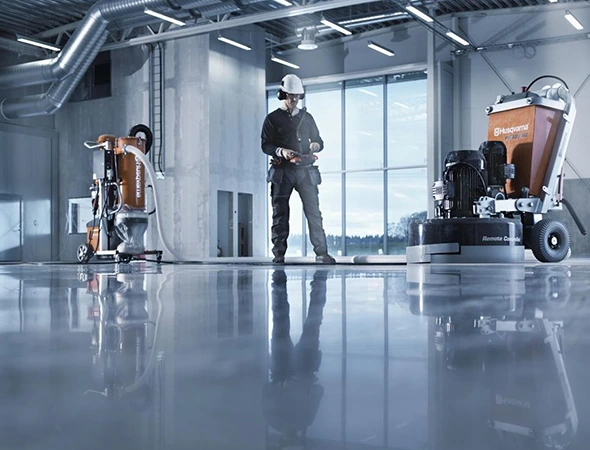
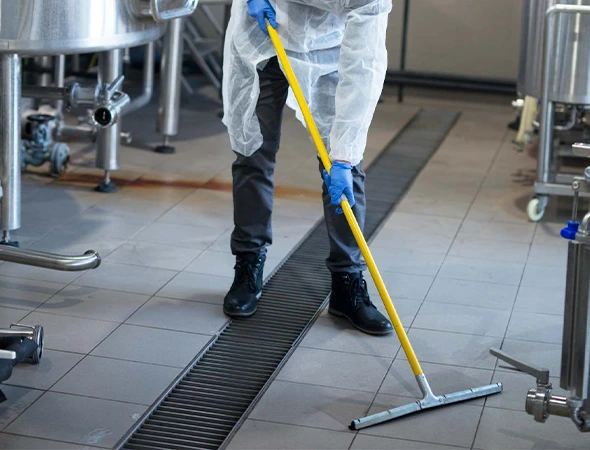
Forklift traffic does something to a concrete slab that foot traffic never will. Tire marks build into black streaks along the main runs, hydraulic drips leave stains that spread, and fine dust packs into the surface until the floor turns gray and starts dusting back into the air. Sweeping moves it around. It does not remove it.
Our team run autoscrubbers across open floor space, which lay down solution, scrub, and recover the dirty water in one pass instead of leaving a wet slab behind. Degreasing gets used where oil has soaked in, particularly around charging stations and equipment bays. Edges, corners, and the strips under racking are done separately, since machines cannot reach them. A clean slab also makes spills and damage visible, and we would rather your team spot a hazard than walk through it.
Industrial sites rarely need only one kind of cleaning. Attached offices, restrooms, and floors all have different requirements from the warehouse space itself.
Mixed-use buildings need coverage across the entire space instead of one zone at a time. Restrooms, entrances, glass, trash, break areas, and touch surfaces sit under one scope. Frequency follows how hard the building works. Our task lists get written per site and updated as usage shifts. The facility reads as maintained throughout.
Shift Awareness. Work gets scheduled around receiving windows, production runs, and shift changes. A crew blocking an active aisle costs you more than the cleaning saves.
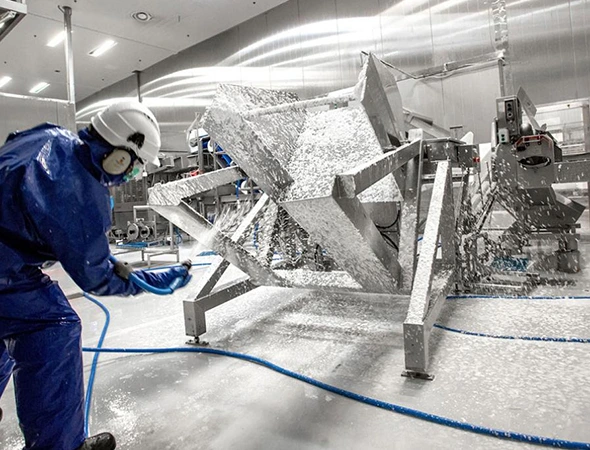
Live Equipment Safety. Our crews understand working near forklifts, conveyors, and moving traffic without needing supervision. Your team keeps operating while ours works.
Sectioned Access. Areas get cleaned in blocks you can release rather than requiring the whole floor. Nobody has to shut down a facility for a cleaning schedule.
Machine Capability. Autoscrubbers and industrial vacuums handle square footage that manual methods never will. Large open floors get covered in hours instead of days.
Audit Readiness. Housekeeping findings usually come from elevated dust and neglected corners. Those areas stay on the scope list rather than being skipped for convenience.
Owner Walkthroughs. Gabriel scopes industrial sites personally before quoting. Square footage alone tells you nothing about what a building actually needs.
Gabriel walks the floor with your operations lead, checking soil conditions, access limits, and traffic patterns. Pricing follows what the building actually needs.
Cleaning windows, restricted zones, and safety requirements are agreed in writing. Our team works to your site rules, not around them.
Work runs section by section so operations continue. Coverage rotates until the full footprint is done, then repeats on your cycle.
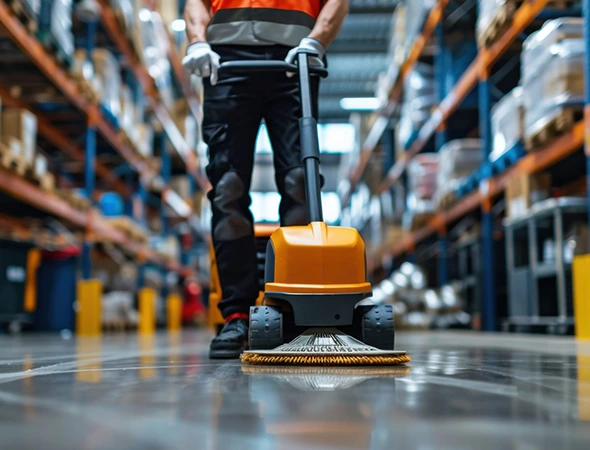
Dust in an industrial building does not stay at floor level. It settles on beams, conduit runs, sprinkler pipes, light fixtures, and the tops of racking, then drops back down every time a door opens or the air moves. Kern County agriculture and oilfield operations push a constant supply of fine grit into buildings across the region, so the load here is heavier than most places.
That buildup causes real problems. It lands on stock, works into machinery, and creates a housekeeping finding the moment an inspector looks up. We clear elevated surfaces where access allows, along with ledges, window sills, and the corners where debris collects. Our crews use industrial vacuums with filtration rather than blowers, because blowing dust off a beam just relocates it. Packaging waste, banding, and shrink wrap left around staging areas get collected in the same pass.
Docks take the worst of everything. Outside dirt comes in on every trailer, rain and mud track through the doors, pallets shed splinters and nails, and spills from damaged freight end up on the apron where nobody claims them. Our dock cleaning covers the floor surface, the apron outside the doors, dock plates and levelers, bumpers, and the seals around each opening.
Grease from dock equipment gets degreased rather than smeared. Debris around trailer bays comes out, since loose banding and broken pallet wood are a genuine trip and tire hazard in a space where equipment moves constantly. G Bravo Cleaning Service schedules this work around your receiving windows, because a crew standing in an active dock helps nobody. A clean dock also slows how fast outside dirt reaches the rest of your floor.
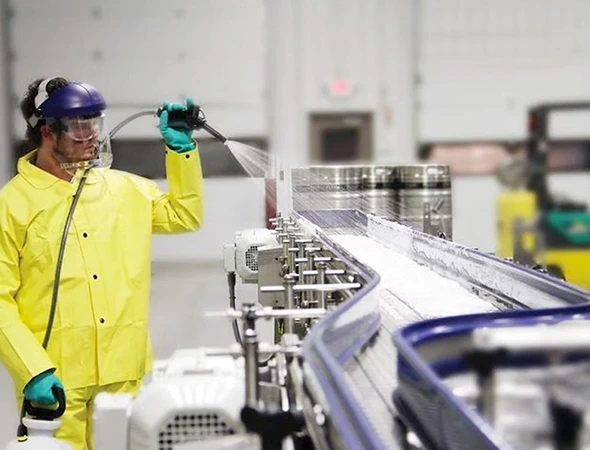
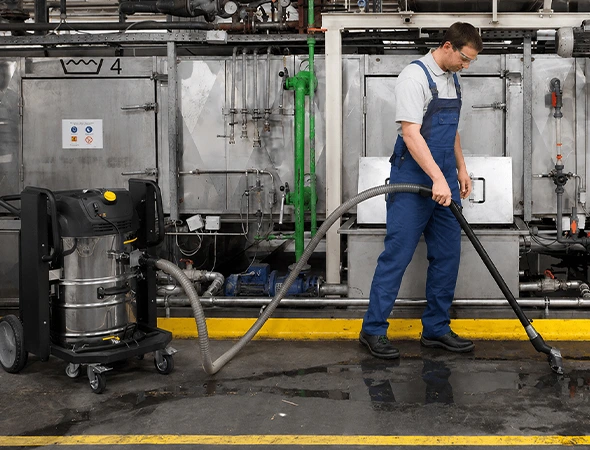
Aisles are where cleaning usually gets skipped, because racking is full and equipment is moving. The result is dust building along the base of uprights, debris collecting under bottom shelves, and film accumulating on pallet positions nobody pulls. Working these spaces takes coordination more than equipment. Our teams clean aisle by aisle, in sections your operation can release, rather than asking for the whole floor at once.
Narrow runs get walk-behind machines and manual work where a ride-on will not fit safely. Rack uprights, bottom beam levels, and floor markings get attention, since faded or dirty aisle markings stop doing their safety job. Keeping aisles clear and clean also protects your stock, because grit that sits on the floor ends up on the product sitting above it.
Most industrial sites reach a point where routine cleaning is not enough. An audit is coming, a lease is ending, a client is touring, or the building has simply gone too long without a reset. A deep clean goes after everything the regular scope leaves behind. Elevated surfaces, wall panels, doors and frames, restroom and locker room detail, break rooms, attached offices, and full floor restoration all get covered in one planned effort.
We schedule these around downtime, shutdowns, or weekend windows so production is not interrupted. Scope gets agreed in writing beforehand, since a deep clean without clear boundaries turns into an argument about what was included. Our crews work to that list, and you see the difference in the areas your people had stopped noticing.
How is warehouse cleaning priced per month?
Pricing depends on square footage, floor condition, how many dock doors and restrooms you have, and how much of the space we can access at once. A 20,000-square-foot storage building and a busy distribution center are different jobs at the same square footage. Our quote comes in writing after Gabriel walks the site, with the zones and frequency listed. That lets you compare bids on scope rather than headline price.
Do you clean while the facility operates?
Yes, and most of our industrial clients work this way. Cleaning runs in sections your team releases, so operations continue in the rest of the building. Access windows and restricted zones are agreed upon upfront. Where a full shutdown is genuinely needed, such as a total floor restoration, we plan it around your downtime.
Can you handle high ceilings and racking?
We clean elevated surfaces where safe access allows, including beams, ledges, and rack tops reachable with standard equipment. Work requiring lifts, fall protection systems, or specialized access gets discussed during the site walk rather than assumed. Your racking layout and ceiling height determine what is realistic. Gabriel will tell you plainly what our crews can and cannot reach.
Do you handle oil and chemical spills?
Routine oil marks, hydraulic drips, and general grease get degreased as part of floor work. Hazardous material spills, chemical containment, and regulated waste are not something we take on, and those belong with a licensed specialist. Confirming that boundary early avoids anyone assuming otherwise during an incident. Our scope covers housekeeping, not hazmat.
What about restrooms and break areas?
Those are included whenever you want them in the scope. Industrial restrooms and locker rooms take heavier use than office facilities, so they usually need more frequent attention. Break rooms serving shift workers get the same treatment. Tell us the headcount, and we build the frequency around it.
Call (661) 703-3005 to arrange a site walk and receive written pricing built around your square footage and access windows. Email gbravocleaningservices@gmail.com with your facility type, floor size, and operating schedule for faster scoping.
Large facilities should not have to shut down to get clean. Working in zones around live equipment and shift changes is what G Bravo Cleaning Service is built to do. Gabriel wants operations managers to trust his crews with restricted access and keep them on site for years.
WhatsApp us