Replacing commercial flooring costs far more than maintaining it. Commercial floor care in Bakersfield, CA restores what daily mopping cannot reach across VCT, tile, grout, concrete, and carpet. We use machines we own for stripping, waxing, buffing, burnishing, and extraction. Facility managers schedule the work around operating hours.
Book your floor assessment.
Floor care is periodic restoration work that routine cleaning cannot accomplish. It includes stripping old finish and applying new wax, buffing and burnishing to restore gloss, deep scrubbing of tile and grout lines, concrete cleaning, and hot water extraction on commercial carpet.
The work uses machines built for each task: floor machines, autoscrubbers, burnishers, and extractors, matched to the surface being treated. Daily mopping and vacuuming are not part of this. Those belong to a janitorial routine. Floor care addresses buildup that accumulates over months and cannot be removed through everyday cleaning alone.
Vacuuming lifts what sits on the surface. It does little about material that has worked into the backing. Commercial carpet takes constant foot traffic, and Valley dust carried in on shoes settles deep in the fiber where it can grind against the pile with repeated walking. That abrasion contributes to visible wear over time.
Hot water extraction pulls that material back up. Our team pre-treats traffic lanes and spots, agitates the pile, then extracts with strong recovery so the carpet can dry within a practical operating window. Entry areas and main walkways usually need more frequent attention than open floor space, so we treat them on a different cycle instead of applying one schedule to the whole floor. Regular extraction can keep accumulated soil from becoming a reason to replace otherwise serviceable carpet.
Floor care is periodic by nature, so most buildings need it alongside regular cleaning. These services cover the rest of the facility and the routines that keep floors in better condition between restoration visits.
Mixed-use buildings need coverage across the whole space rather than one area at a time. Restrooms, entrances, glass, trash, break areas, and touch surfaces sit under a single scope. Frequency follows how heavily the building operates. Our task lists are written per site and adjusted as usage changes. The facility receives consistent attention beyond the flooring itself.
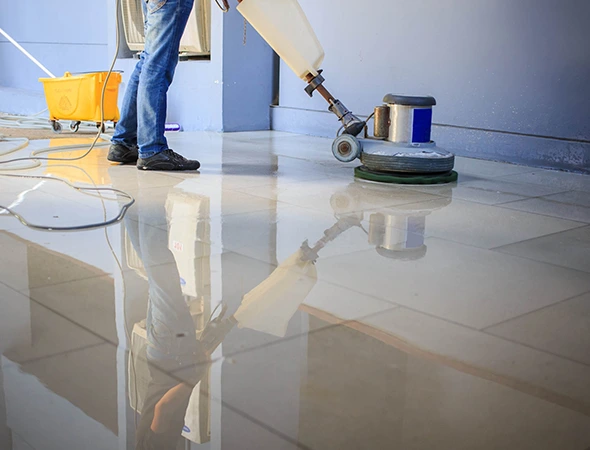
Equipment Owned. Floor machines, burnishers, autoscrubbers, and extractors belong to us, not a rental yard. Booking does not wait on outside equipment availability, and crews know the machines they operate.
Surface Matched. Method follows the flooring material, since the wrong pad or chemical can damage a finish. Getting that judgment right takes experience with different surfaces rather than relying on a product label alone.
Cure Time Respected. Finish coats need appropriate drying and curing between layers, based on the product requirements. Timelines are set around those requirements rather than rushing the next step.
Honest Assessment. Some floors will not return to their original condition, particularly unsealed grout and deeply worn tile. You hear that before the work is booked, not afterward.
Operations Considered. Work is timed so floors are dry and usable when you reopen. Areas can be staged in sections where the whole floor cannot close at once.
Long-Term Planning. Buffing intervals and strip cycles get mapped out rather than booked reactively. Planned maintenance can reduce the need for larger corrective work over time.
Our team checks the material, existing finish, wear level, and square footage in person. That determines the method and realistic outcome, which is explained before you commit.
Sections are staged around your operating pattern so the building keeps functioning. Furniture moving and access needs are agreed upon beforehand.
Buffing intervals and the next full cycle get set based on your traffic. This keeps the floor from slipping back into the same condition.
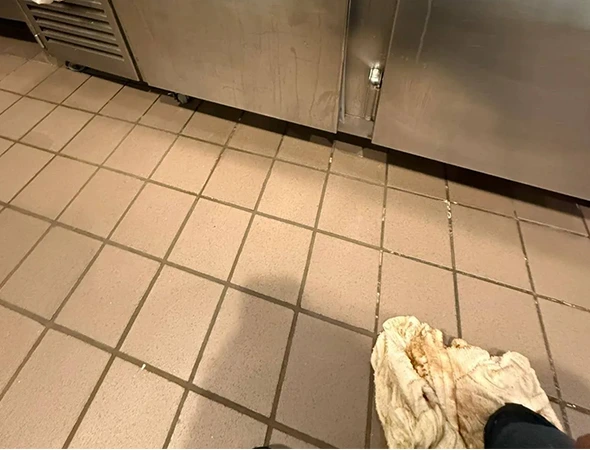
Vinyl composition tile can look dull long before it is actually worn. What you are seeing may be old finish, scratched and loaded with dirt, sitting over tile that remains sound underneath. Adding another coat without addressing that buildup can trap soil below the new finish and leave the surface looking uneven.
Stripping removes the existing finish before anything new goes down. Seams and edges receive attention by hand, since old wax often builds up heavily in those areas. Fresh coats are applied in controlled layers and allowed to cure according to the product requirements, because rushing the process can contribute to peeling and premature wear. Our team handles the full strip and refinish cycle with our own machines, so timing does not depend on another company’s equipment schedule. A properly stripped and sealed floor can maintain its appearance longer than one repeatedly recoated over an overloaded finish.
Grout is porous, which makes it especially prone to holding soil. Mop water can push dirt into those lines and leave it there, so the tile gets cleaner while the grout gradually looks darker. Eventually, the entire floor can appear dirty even after routine cleaning.
Restroom floors and kitchen areas show this quickly because moisture and traffic combine. Our teams use pressurized cleaning with recovery, so soil is lifted from the grout instead of simply redistributed across the floor. Corners, edges, and base tile receive additional hand work. Heavily soiled grout may not return to its original color, particularly where it was never sealed, and we explain that before taking payment. Sealing afterward is worth discussing because it can slow how quickly the lines darken again and make our cleaning work easier to maintain.
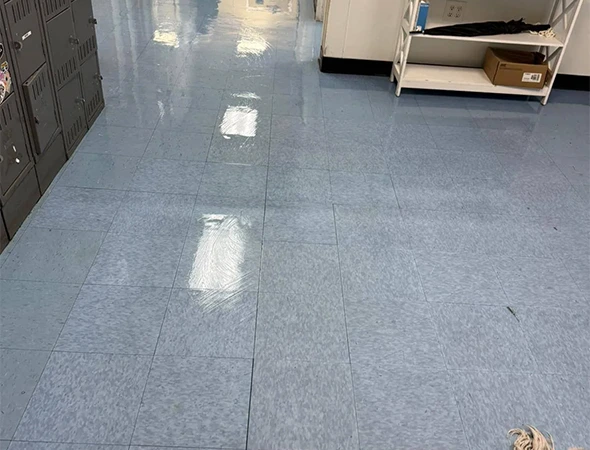
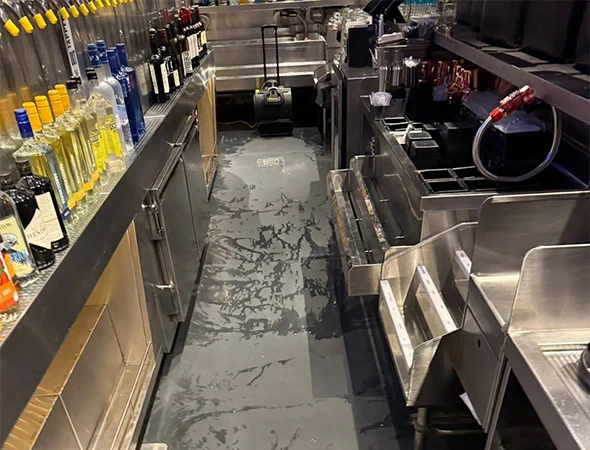
Buffing sits between routine cleaning and full stripping. It is maintenance rather than restoration. Using it at the right point can reduce how often a complete refinish becomes necessary. A buffing pass smooths light scratching and scuff marks in the existing finish while restoring gloss to a floor that has gone flat. Burnishing runs at higher speed for a harder shine on floors with a compatible finish.
Retail entrances, corridors, and lobbies benefit most because those surfaces receive highly visible wear. We can schedule buffing at sensible intervals to extend the time between strip and wax cycles and help control flooring costs over the year. Our recurring plans can include these passes so nobody has to remember to book them.
Concrete often gets treated as maintenance-free, which can leave heavily used floors looking neglected. Warehouse and industrial floors collect oil, tire marks, and fine dust, while sealed concrete in retail or office settings can develop a dull film that routine mopping may spread rather than remove.
Cleaning starts with the right approach for how the slab was finished. Sealed and polished concrete needs methods that protect the existing coating, while bare industrial slab may require heavier scrubbing and degreasing where oil has accumulated. Our crews use autoscrubbers on large open floor areas, while edges and corners receive separate attention where machines cannot reach. Dust control on concrete also matters because loose surface grit can migrate back into the air and onto nearby stock. We consider the condition of the slab before selecting a cleaning method, while our process keeps surface protection and facility use in mind.
How much does strip and wax cost?
Pricing depends on square footage, how many coats the floor needs, the condition of the existing finish, and how much furniture has to move. A floor stripped last year may cost less than one repeatedly recoated for a decade. You get a written quote after Gabriel sees the floor, with the number of coats stated. That lets you compare quotes based on the actual scope rather than price alone.
How often should commercial floors be stripped?
It depends on traffic, not a fixed calendar. Heavy retail or entrance areas may need annual attention, while low-traffic office floors can go longer with buffing between cycles. Stripping too often removes more finish than necessary and adds avoidable cost. Gabriel will tell you what your floor needs after seeing its wear pattern.
How long until floors can be walked on?
Finish coats need proper cure time, and that varies with the product, humidity, and airflow. Many floors become walkable within hours of the final coat but should remain clear of heavy traffic and furniture longer. Exact timing is confirmed before work starts so you can plan around it. Rushing the return to service can affect the finish.
Do you move furniture and equipment?
Light furniture such as chairs and small tables can usually be moved as part of the work. Heavy equipment, filing systems, and anything requiring disconnection stay with your team. This gets sorted during the assessment so nobody is surprised on the day. Clear floors mean more efficient work and better access.
Can badly stained carpet be saved?
Often, but not always. Set-in stains, bleach marks, and damage to the fiber itself may not extract out, and promising otherwise wastes your money. Traffic-lane soiling and general dulling usually respond better to extraction. Gabriel will tell you what the process can and cannot address before booking.
Call (661) 703-3005 to arrange a floor assessment and receive written pricing for stripping, waxing, or extraction. Email gbravocleaningservices@gmail.com with your flooring type, square footage, and current condition for faster scoping.
Commercial flooring lasts longer when maintained properly, and replacing it early costs money nobody budgeted for. Owning the machines and telling clients honestly what a floor can recover to is how G Bravo Cleaning Service works. Becoming the name facility managers call for restoration, not just routine cleaning, is the goal.
WhatsApp us